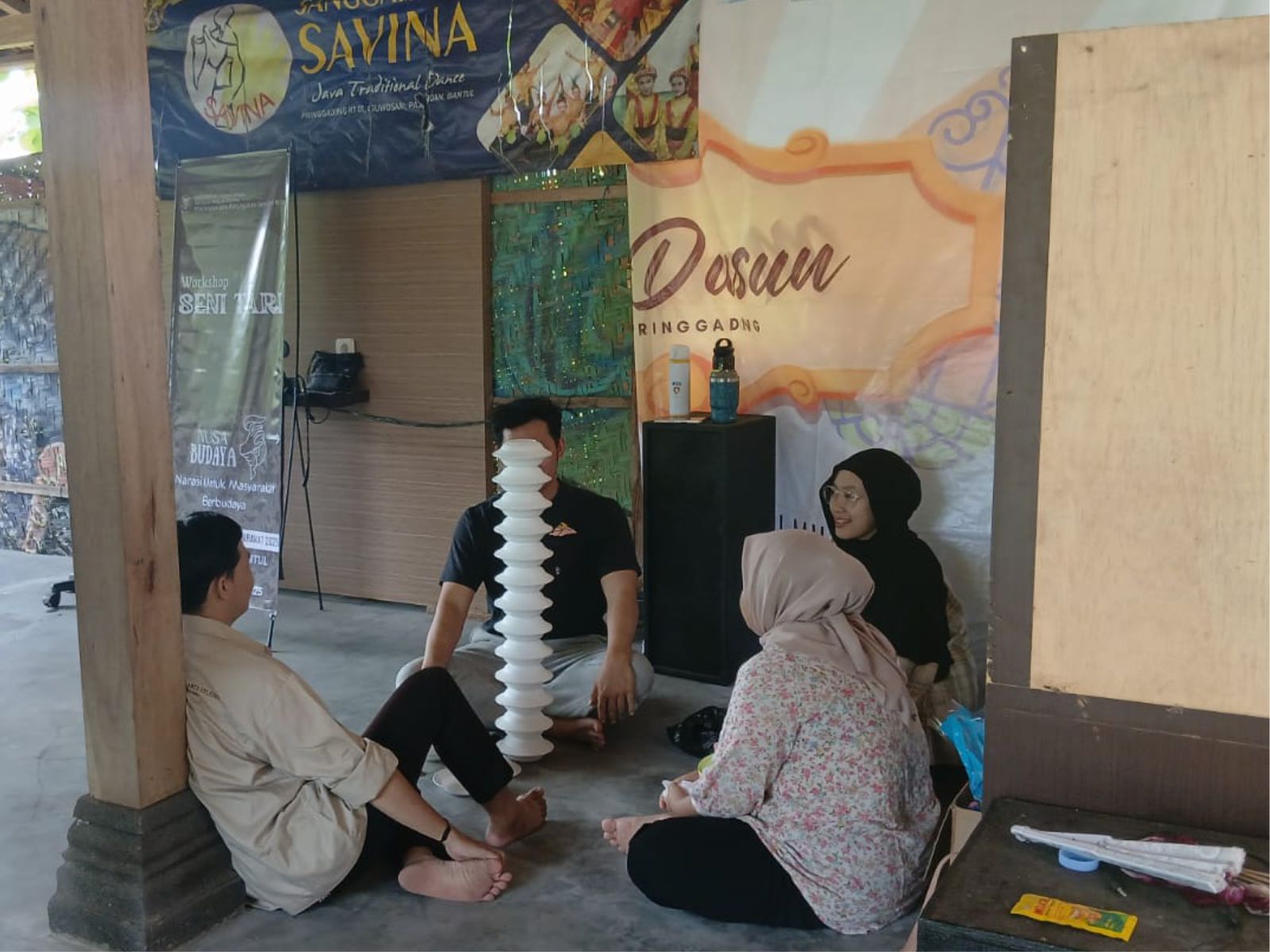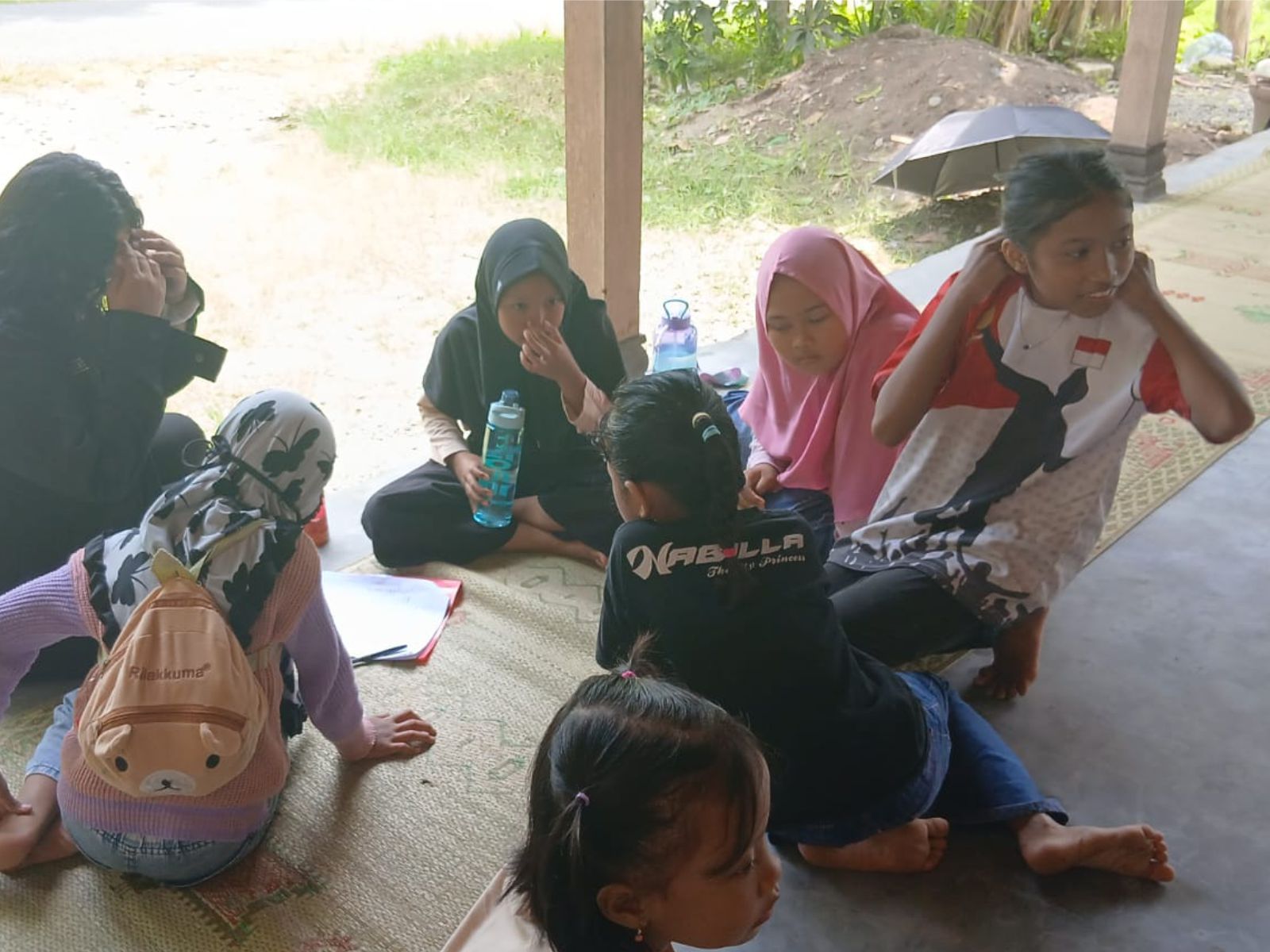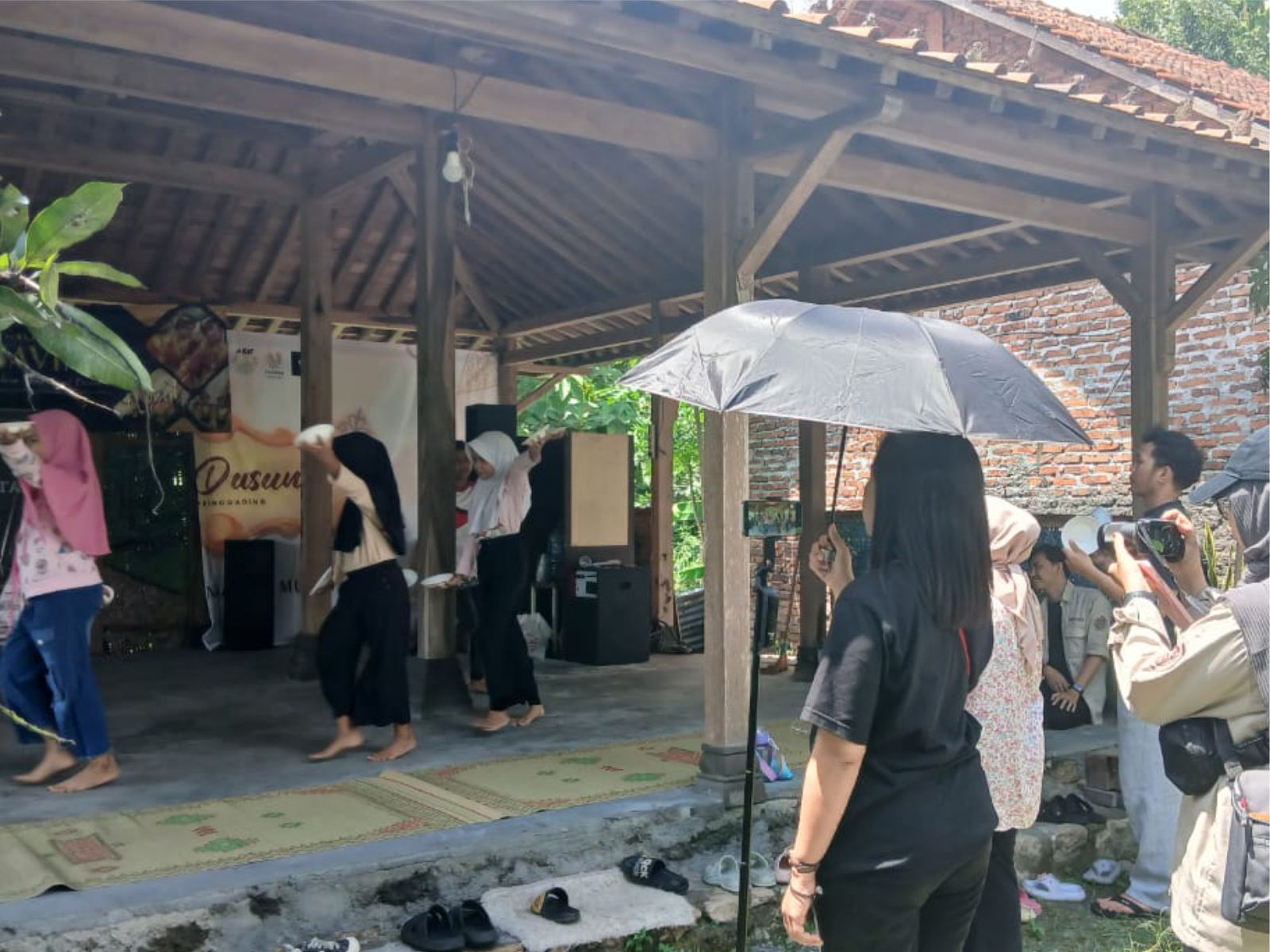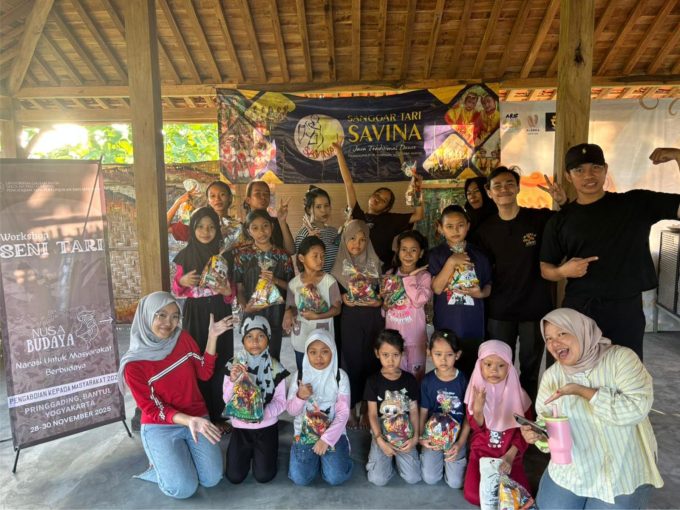
Yogyakarta – In an effort to reweave fragments of national identity through the lens of performing arts, the community engagement program entitled “Nusa Budaya”, initiated by the Study Program of Performing Arts and Visual Arts Studies, conducted a Plate Dance (Tari Piring) Workshop on 28–29 November 2025. The workshop involved 18 female child participants at Sanggar Savina and was conceived not merely as a transfer of motor skills, but as an initiative to decentralize aesthetics amid the strong dominance of Javanese court dance (pakem kraton) traditions deeply rooted in the region.
From the outset, the PSPSR team recognized the importance of diversity, particularly diversity in artistic content. Accordingly, the team proposed dance materials originating outside Java to broaden cultural literacy and move beyond prevailing aesthetic hegemonies. Through participatory dialogue with the studio management, Tari Piring from Minangkabau culture was selected, surpassing alternative options such as Tari Pakarena (South Sulawesi) and Tari Rantak (Minangkabau). This decision aligned with the broader agenda of preserving Indonesia’s diverse cultural heritage. Historically, the selected version of Tari Piring—the Piriang Sofyani style—represents an aesthetic reconstruction by the renowned maestro Sofyani, who reformulated the dance to suit modern stage contexts and arts education curricula.
The implementation of the Plate Dance Workshop also embodied principles of arts pedagogy for children, emphasizing simulation, adaptation, and contextual responsiveness. Consequently, certain adjustments were unavoidable, including reductions in tempo and choreographic complexity. For instance, the rapid cross-stepping footwork, which constitutes a core dynamic element of Minangkabau dance, was deliberately slowed to maintain group synchronization without disrupting the underlying musical structure. Another critical adaptation concerned the dance property: traditional ceramic plates were replaced with plastic ones. While functionally serving as a risk mitigation measure, this substitution introduced new pedagogical challenges. The lightweight plastic plates reduced the sense of inertia and balance that forms the expressive core of Tari Piring. This experience underscored the necessity for arts education to remain inclusive and responsive to participants’ cognitive and physical capacities, while still preserving the essential character of the tradition.
On the second day, the workshop incorporated a visual dimension through the introduction of traditional Minangkabau costume elements, including suntiang, laca, velvet baju kurung, and songket. This session functioned not only as an exploration of costume aesthetics, but also as a means of instilling material cultural identity among children who are predominantly immersed in Javanese cultural environments.
The workshop concluded on the third day with a documentation activation in the form of video recording. The successful performance of the modified choreography by all 18 participants was documented, demonstrating that the children’s foundational dance skills constitute a form of cultural capital that enables adaptation across different stylistic traditions.
Overall, the Nusa Budaya program opened a meaningful intercultural dialogue, particularly regarding questions of compromise in cultural transmission—such as how to preserve movement sensitivity when original properties (ceramic plates) are replaced with alternative materials for practical considerations. This discourse contributes to broader conversations in the field of performing arts concerning the boundaries between preservation and adaptation. Collectively, the Plate Dance Workshop made a tangible contribution to women’s empowerment through artistic expression while simultaneously strengthening the foundations of an increasingly heterogeneous and inclusive national cultural resilience.
Sustainable Development Goals (SDGs) Contribution:
- SDG 4: Quality Education – The workshop supports inclusive, culturally responsive arts education by providing children with access to diverse performing arts traditions through adaptive and participatory learning models.
- SDG 5: Gender Equality – By engaging young girls as active participants in cultural practice, the program contributes to women’s empowerment and equal opportunities for creative expression from an early age. (Asriuni)