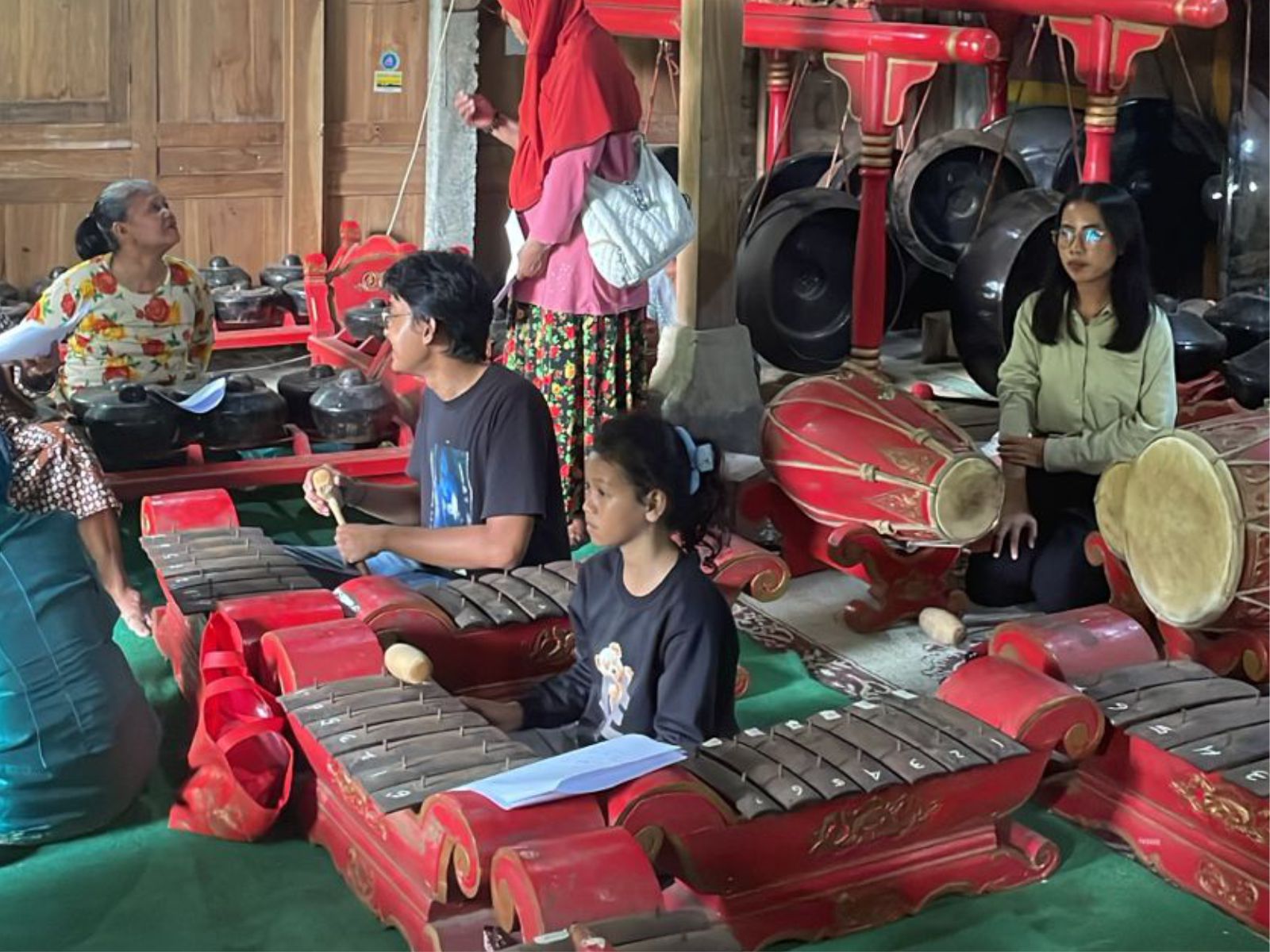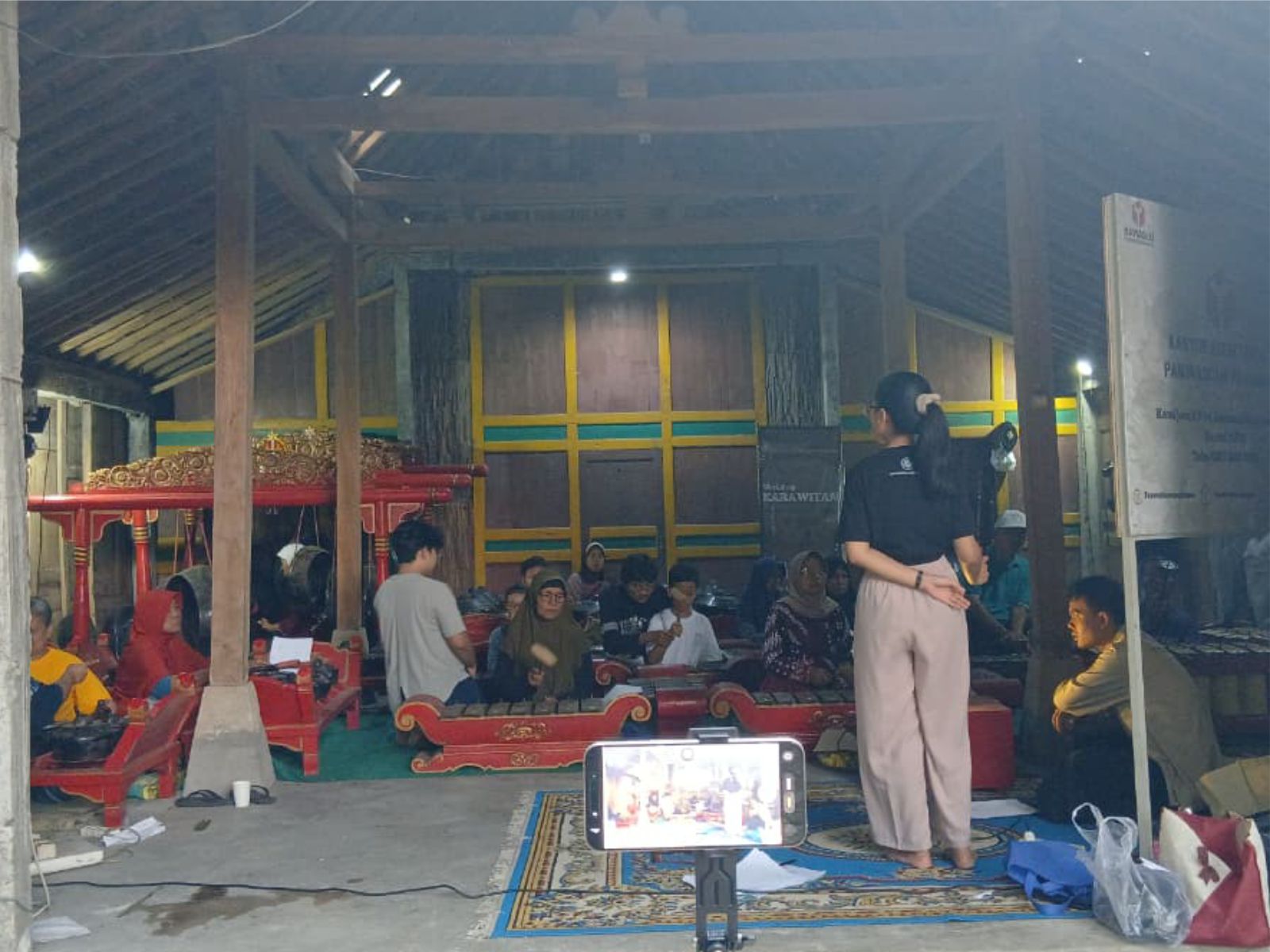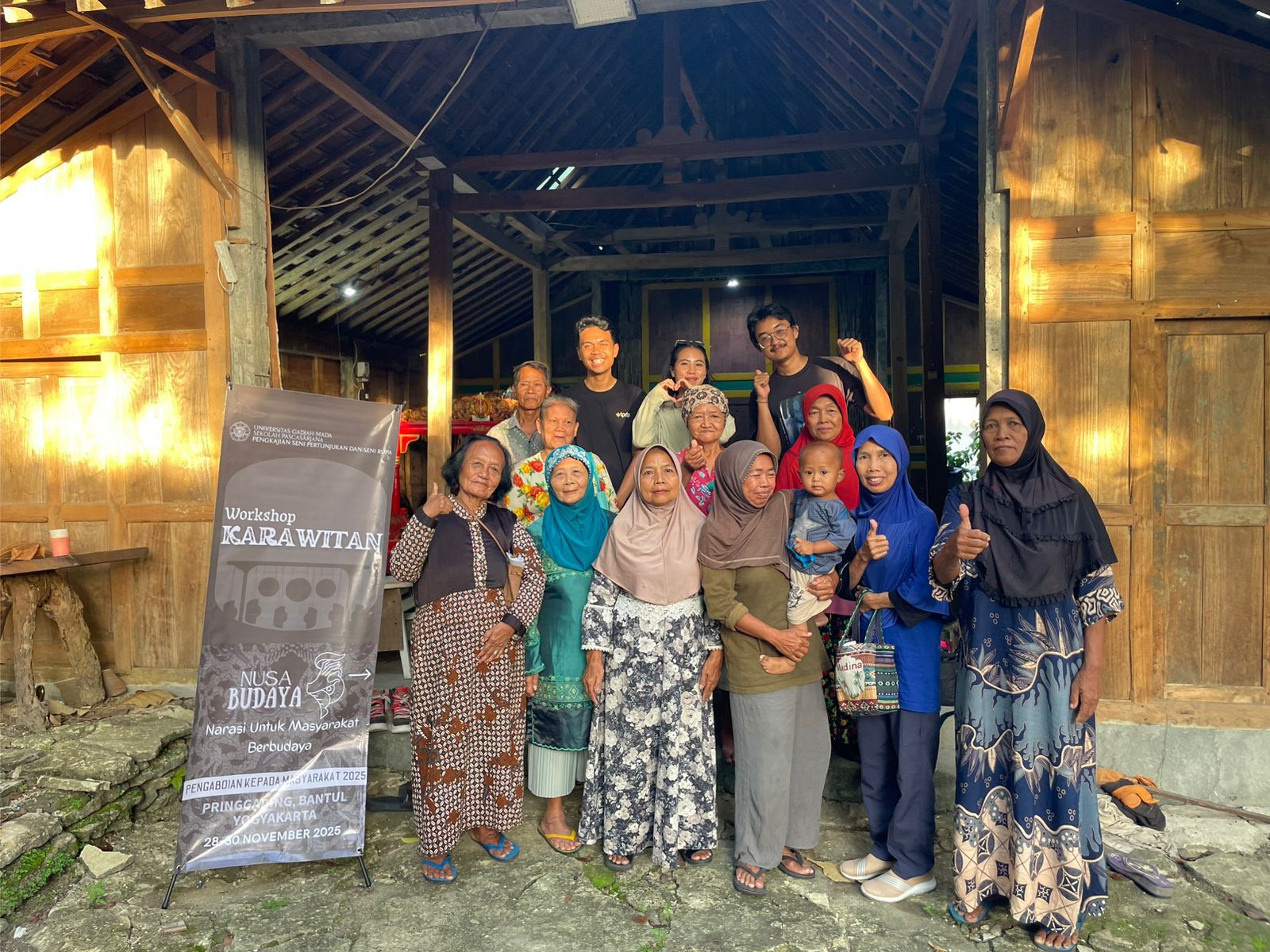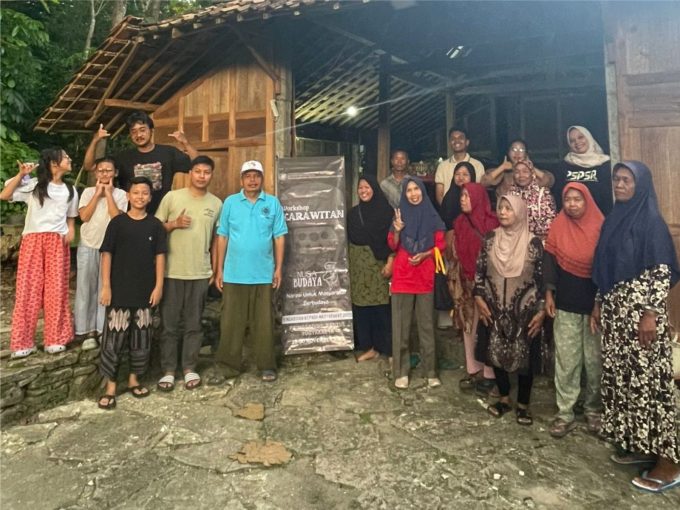
The Study Program of Performing Arts and Visual Arts Studies, Graduate School of Universitas Gadjah Mada, organized a Karawitan (Javanese gamelan) workshop for older adults in Pringgading Village, Bantul, on 28–29 November 2025. Conducted over three days, this activity formed part of the community engagement program “Nusa Budaya: Narratives for a Cultured Society”, an initiative that positions artistic practice as a medium for strengthening social relations, transmitting cultural values, and enhancing the quality of life within rural communities. Through this program, students not only examined the social relevance of karawitan scholarship, but also accompanied older adults as active and productive cultural practitioners.
The primary focus of the workshop was the introduction and learning of two gamelan compositions created by the karawitan team, namely a lancaran and a ladrang, both specifically composed for this program. The lancaran, inspired by the lyric “Ngugemi kabudayane, sepuh anem pijer kenthenge”, was constructed using firm kendang patterns and the Slendro Manyura tuning system. This composition aligns with the theme of respect for elders, signifying the community’s steadfast commitment to preserving cultural values. The bright interplay of bonang and saron provided opportunities for older participants to experience warm musical energy while engaging with aesthetic expressions closely connected to their cultural memories.
The second composition, Ladrang Bhakti Kridha, was developed with a broader musical structure to depict the beauty of the Pringgading area and the harmony of its social life. Drawing from the lyric “Wewengkoning katon endah, tentrem makmur bagya mulya reja”, the piece evokes a gentle atmosphere through the expanded use of gender and gambang. In the section “setya tuhu mring kawasa, kabudayane den rembaka”, the kendang structure becomes more assertive, symbolizing the community’s resilience in sustaining cultural traditions. The inclusion of the rebab further reinforces a sense of refinement and inner sensitivity. The climax of the composition emerges in “bhakti kridha pringgadhing ku, tansah nyengkuyung laku rahayu…”, where increasingly dynamic rhythms and steady gong–kempul cycles represent the collective forward movement of the village community.
Beyond its technical musical dimensions, the workshop functioned as an intergenerational meeting space between students and older adults. This approach fostered a reciprocal learning process: students gained insights into how traditional music operates within the everyday lives of senior community members, while older participants were provided with expressive spaces that support mental well-being, social connectedness, and self-confidence. Such a learning model aligns closely with the sustainable development agenda, encompassing inclusive education, the well-being of older adults, and cultural preservation as a foundation for social resilience in rural contexts. Moreover, the program opened new discussions on the role of traditional arts in creating healthy, productive, and meaningful living environments at the community level.
The series of activities concluded with an appreciation session in which participants performed the two gamelan compositions they had learned. This performance marked that the learning process extended beyond mere musical knowledge transfer, representing a collective effort to sustain cultural memory while reinforcing the position of older adults as custodians of values and role models within the community. The organizing team also outlined follow-up plans, including regular mentoring and the development of simplified learning modules to enable participants to continue karawitan practice independently.
Through this workshop, the collaboration between students and the Pringgading community demonstrates that art is not only a cultural heritage, but also a vital medium through which communities can grow, connect, and strengthen their identities in everyday life.
Sustainable Development Goals (SDGs) Contribution:
- SDG 4: Quality Education – The workshop promotes inclusive and lifelong learning by engaging older adults as active learners and cultural knowledge holders within a community-based educational framework.
- SDG 3: Good Health and Well-being – The program supports the mental and social well-being of older adults by providing artistic activities that enhance social interaction, emotional expression, and self-esteem. (Asriuni)