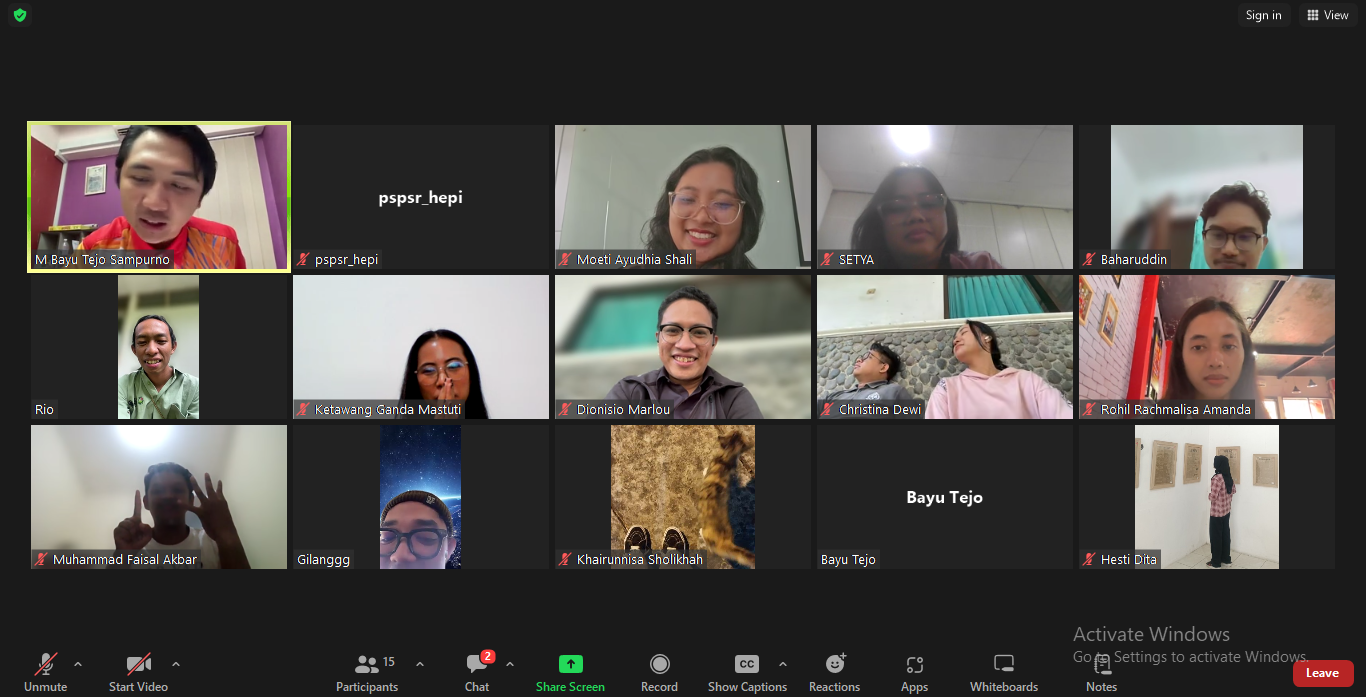
Yogyakarta, 27 November 2025 — A total of 21 students from the Graduate Program of Performing Arts and Visual Arts Studies (PSPSR) participated in a lecture on Art and Education delivered by Bayu Tejo Sampurno, M.A. The session aimed to broaden students’ understanding of the position of art within contemporary educational contexts and to examine the relationship between artistic practice, pedagogy, and sociocultural dynamics.
In his presentation, Bayu Tejo Sampurno emphasized the importance of understanding the current development of art and education, including how educators must cultivate engagement and relevance in their teaching approaches. Creativity-based and student-centered pedagogical strategies were highlighted as key components in effective arts education.
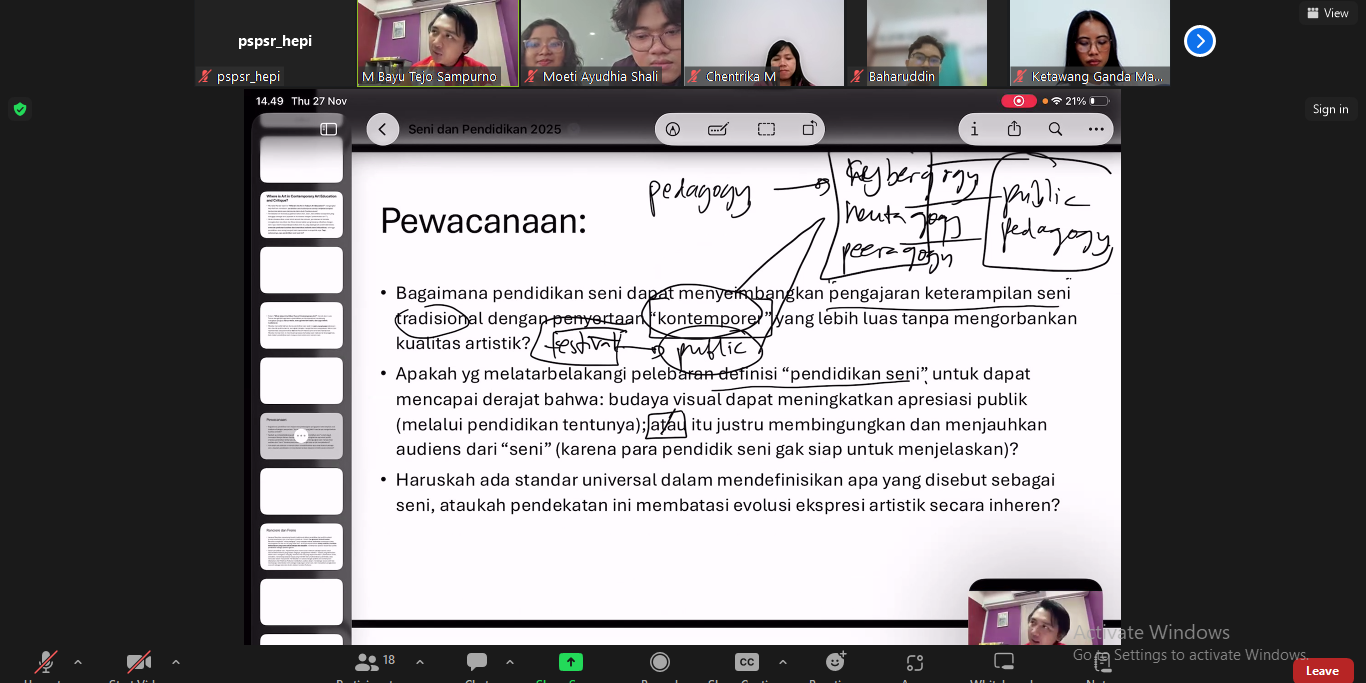
One of the central topics discussed was Art in Contemporary Art Education and Critique, introduced by Michelle Marder Kamhi. Kamhi critiques contemporary art education’s tendency to neglect traditional artistic forms and techniques in favor of “visual culture” studies. She argues that modern art education, which often prioritizes novelty and postmodern ideas, frequently compromises the acquisition of representational skills and the philosophical values embedded in artistic traditions.
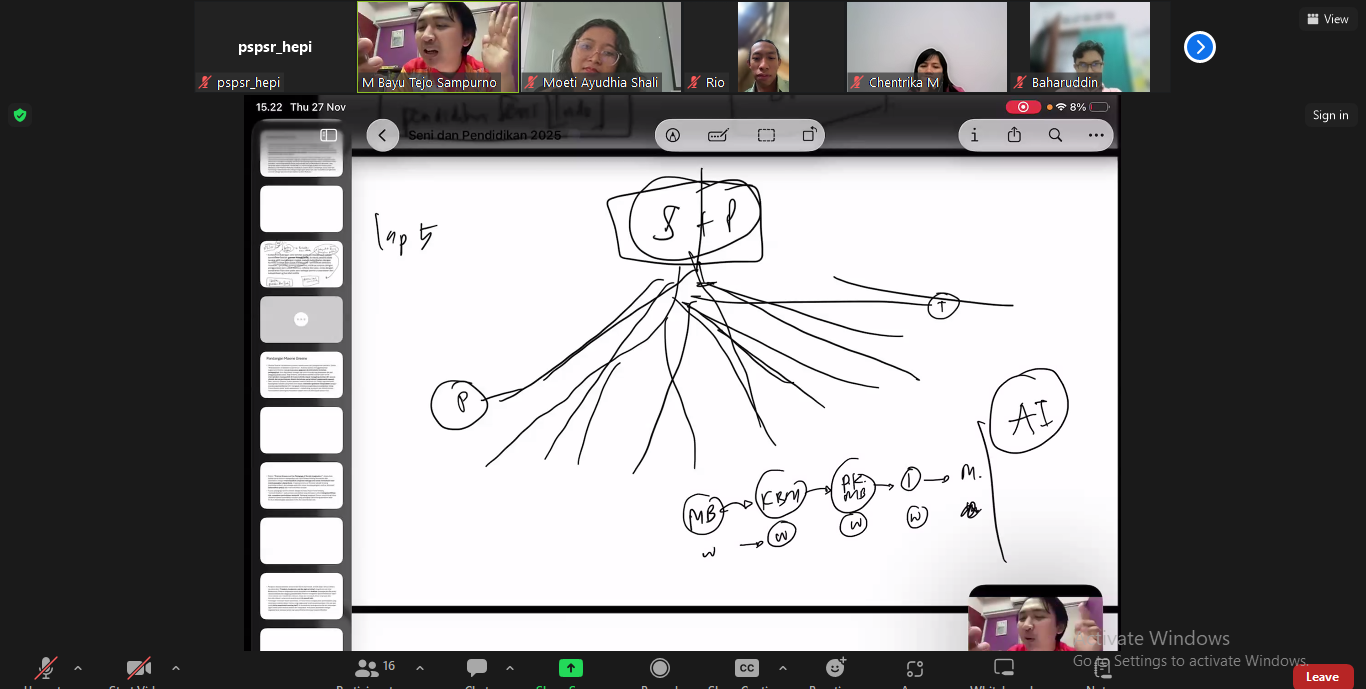
Additionally, Bayu Tejo elaborated on the ideas of Jacques Rancière and Paulo Freire, both of whom challenge traditional hierarchies in education. They assert that every individual possesses equal intellectual capacity for learning and thinking. Education, in their view, serves as a space for emancipation—encouraging creative potential, critical awareness, and egalitarian practices within society.
In Rancière’s philosophy, aesthetic experience plays a role in reorganizing the “distribution of the sensible,” reshaping boundaries regarding who has the right to speak, create, or participate in the social sphere. This perspective aligns with contemporary art practices that actively involve audiences and foster critical engagement with everyday environments. It also corresponds to Mullane’s notion of sensory experience as a form of democratic action.
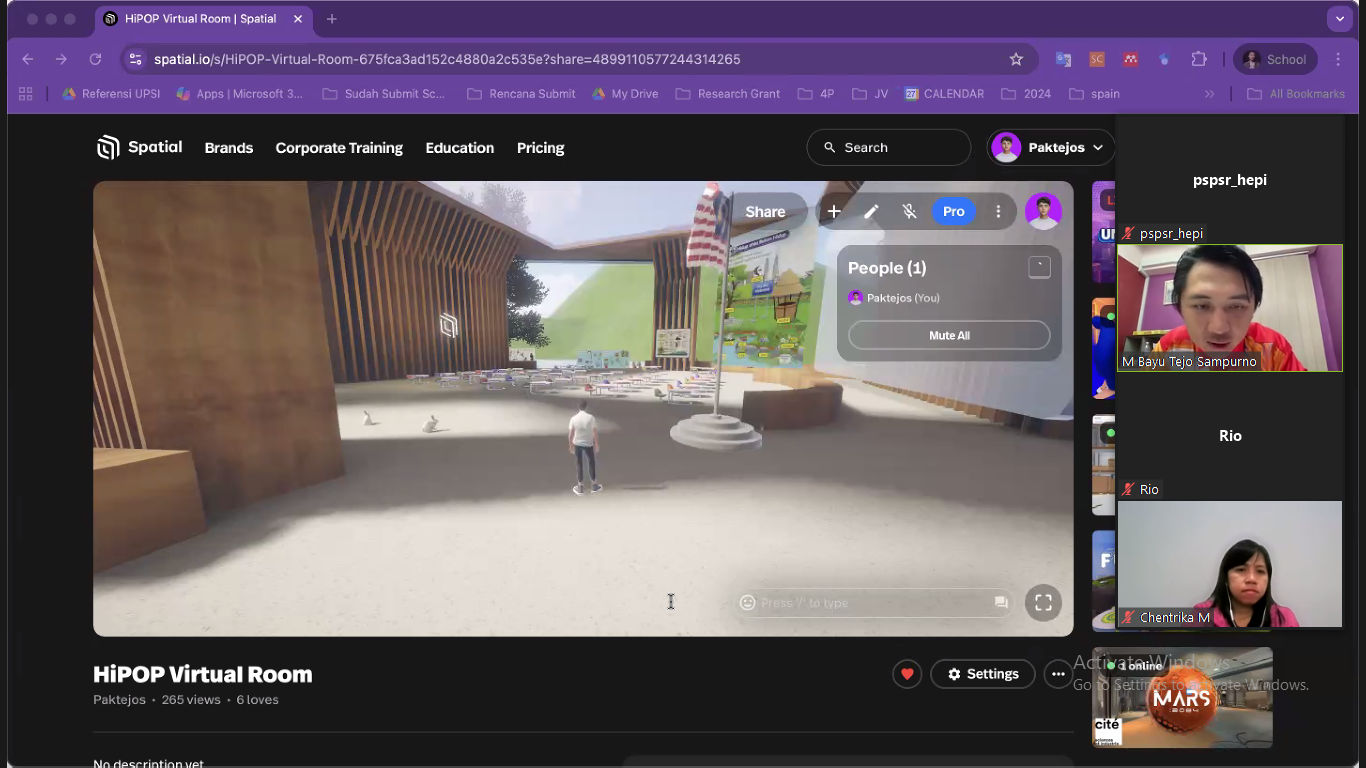
During the next session, Bayu Tejo presented animations and digital games that integrate art and education. These interactive media were showcased as alternative learning tools that are engaging, creative, and enjoyable. The lecture concluded with high enthusiasm from students, followed by an interactive discussion and a group photo session as documentation.
This academic activity is closely aligned with several Sustainable Development Goals (SDGs), emphasizing its broader contribution to global educational development. SDG 4: Quality Education, this lecture contributes to promoting inclusive and high-quality education by fostering creative, critical, and contextually relevant pedagogical approaches within contemporary arts education. SDG 10: Reduced Inequalities, the exploration of Rancière’s and Freire’s educational philosophies underscores the principles of intellectual equality and emancipation, supporting efforts to minimize disparities in educational access and pedagogical practice. SDG 17: Partnerships for the Goals, Through strengthened academic engagement and critical dialogue between students and lecturers, this activity cultivates a more collaborative and interconnected educational ecosystem, in line with global learning objectives. (AHP)