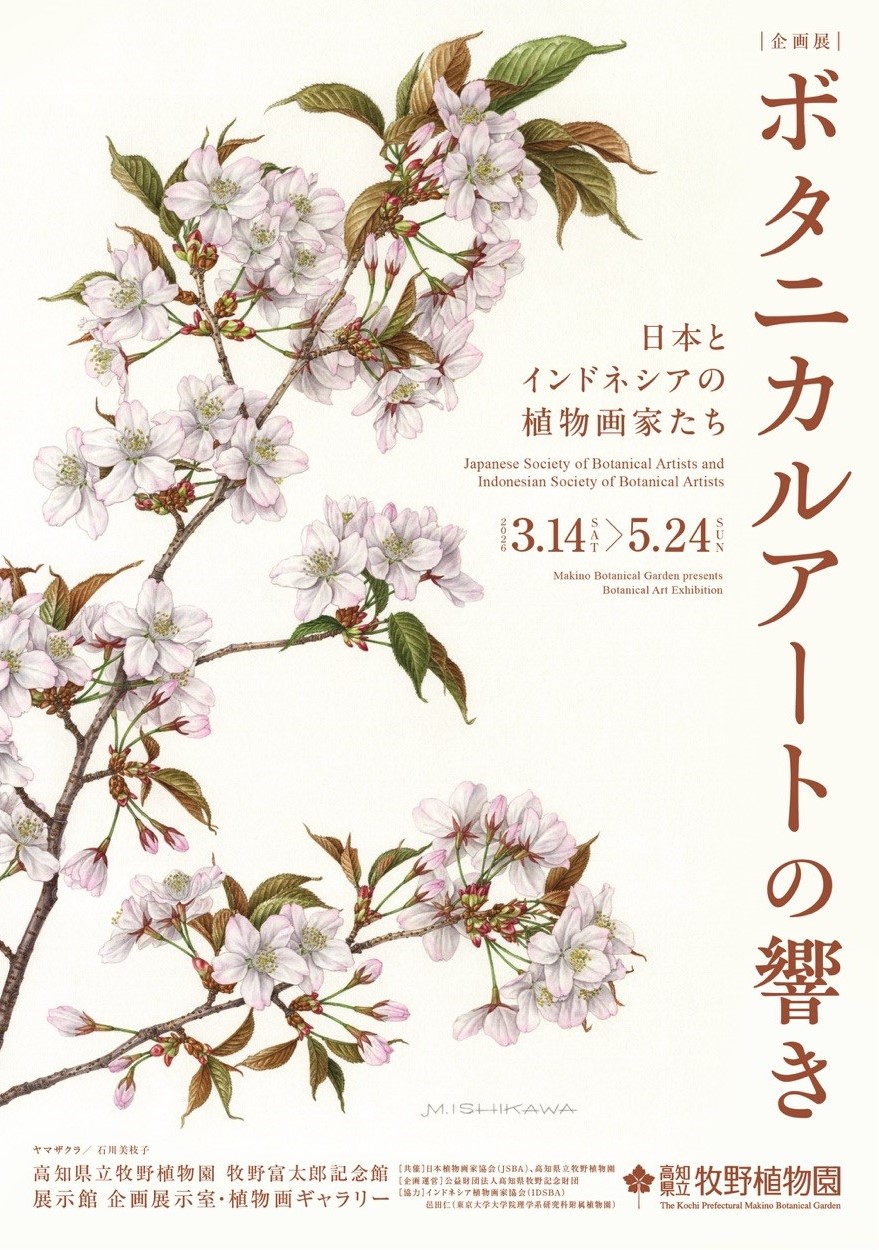
A master’s student from the Performing Arts and Visual Arts Studies Program (PSPSR), Universitas Gadjah Mada, Rio Ananta Prima, participated in an international exhibition organized by the Japanese Society of Botanical Artists (JSBA) at the Kochi Prefectural Makino Botanical Garden in Japan. Held from 14 March to 24 May 2026, the exhibition titled “The Resonance of Botanical Art: Japanese and Indonesian Botanical Artists” highlights an artistic dialogue between botanical artists from Japan and Indonesia through plant illustration works that integrate scientific accuracy with aesthetic approaches.
The exhibition at Makino Botanical Garden presents not only works by members of JSBA and IDSBA but also includes sakura-themed works by Japanese artist Mieko Ishikawa. In addition, several historical botanical collections belonging to Tomitaro Makino—a Japanese botanist widely recognized as a pioneer of modern botanical studies in Japan—are also featured. These materials originate from archival and scientific collections preserved at Makino Botanical Garden, providing both historical and scientific dimensions to the exhibition.
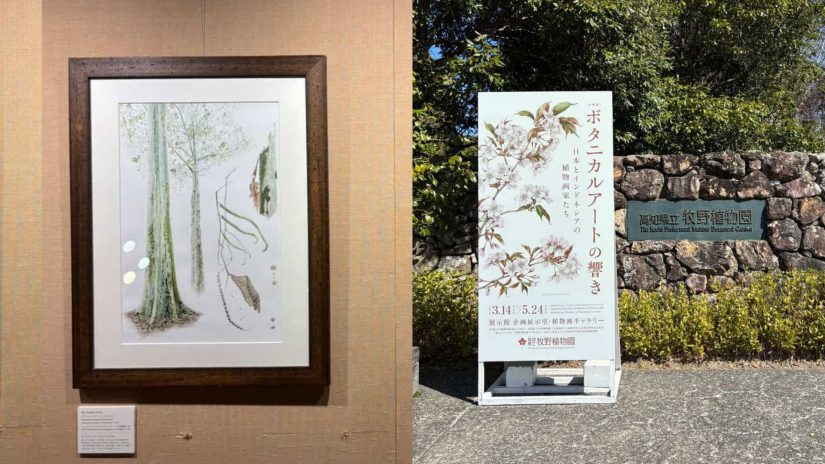
Rio Ananta Prima is a member of the Indonesian Society of Botanical Artists (IDSBA), a community that brings together botanical artists and illustrators in Indonesia. In the exhibition, he presents a botanical illustration entitled “Jade” (2023), created using watercolor on paper. The work depicts Homalium tomentosum, a plant species native to the tropical regions of Indonesia that has become increasingly rare in its natural habitat. Through this artwork, Rio seeks to introduce Indonesia’s tropical flora as part of the world’s biodiversity with significant ecological and scientific value.
The creation of “Jade” originated from Rio’s direct encounter with the plant specimen at the Purwodadi Botanical Garden in Pasuruan, East Java. Through intensive field observation, he documented the plant’s morphological characteristics, including leaf structure, stem formation, and surface texture. These observations were subsequently translated into a botanical illustration that emphasizes both scientific precision and aesthetic visual quality.
Prior to this exhibition, “Jade” had been presented in several prestigious exhibitions at both international and national levels. In 2023–2024, the work was exhibited in the Young Botanical Artist Competition at the Shirley Sherwood Gallery, located within the Royal Botanic Gardens, Kew in London, one of the world’s prominent institutions dedicated to botanical art. The work was also displayed in the exhibition Botanical Art Worldwide 2025 – Indonesia / Ragam Flora Indonesia 5: Khazanah Alam Nusantara, held at the Bogor Botanical Gardens and Bentara Budaya Yogyakarta in 2025.
In addition to Rio Ananta Prima, the exhibition also features the participation of fifteen botanical artists from Indonesia who are members of IDSBA. Among them are Eunike Nugroho and Karyono Apic, alongside several other artists presenting botanical artworks. Their participation reflects the growing development of botanical art practices in Indonesia and demonstrates the increasing engagement of Indonesian artists within international networks of botanical art exhibitions and collaborations.
Through the exhibition “The Resonance of Botanical Art: Japanese and Indonesian Botanical Artists,” botanical art is positioned not only as an artistic practice but also as a medium for scientific documentation and visual education on plant diversity. The participation of Indonesian artists in this exhibition is expected to broaden international appreciation of the tropical flora of the Indonesian archipelago while also strengthening awareness of the importance of biodiversity conservation as part of the world’s shared natural heritage.
The participation of PSPSR master’s students in this exhibition also reflects a contribution to the Sustainable Development Goals (SDGs), particularly:
- SDG 15 (Life on Land), which emphasizes the importance of protecting terrestrial ecosystems and conserving biodiversity. Through the practice of botanical illustration, artists contribute to documenting and raising public awareness of plant diversity, including species that are becoming increasingly rare in their natural habitats.
- SDG 4 (Quality Education) through the use of botanical art as a medium for learning and visual education on plant science.
- SDG 17 (Partnerships for the Goals) through the collaboration established between botanical art communities and institutions from Indonesia and Japan. (RAP)