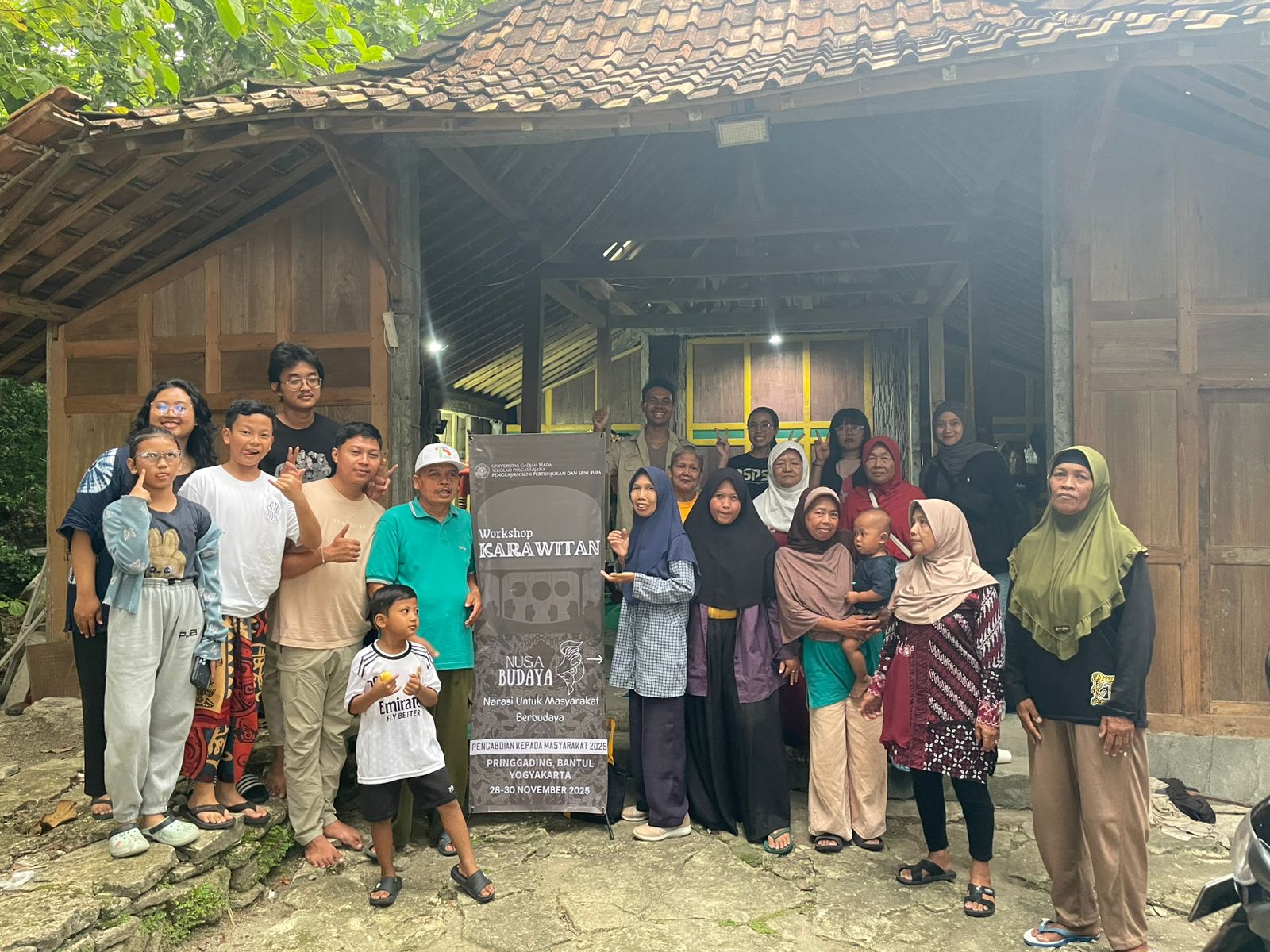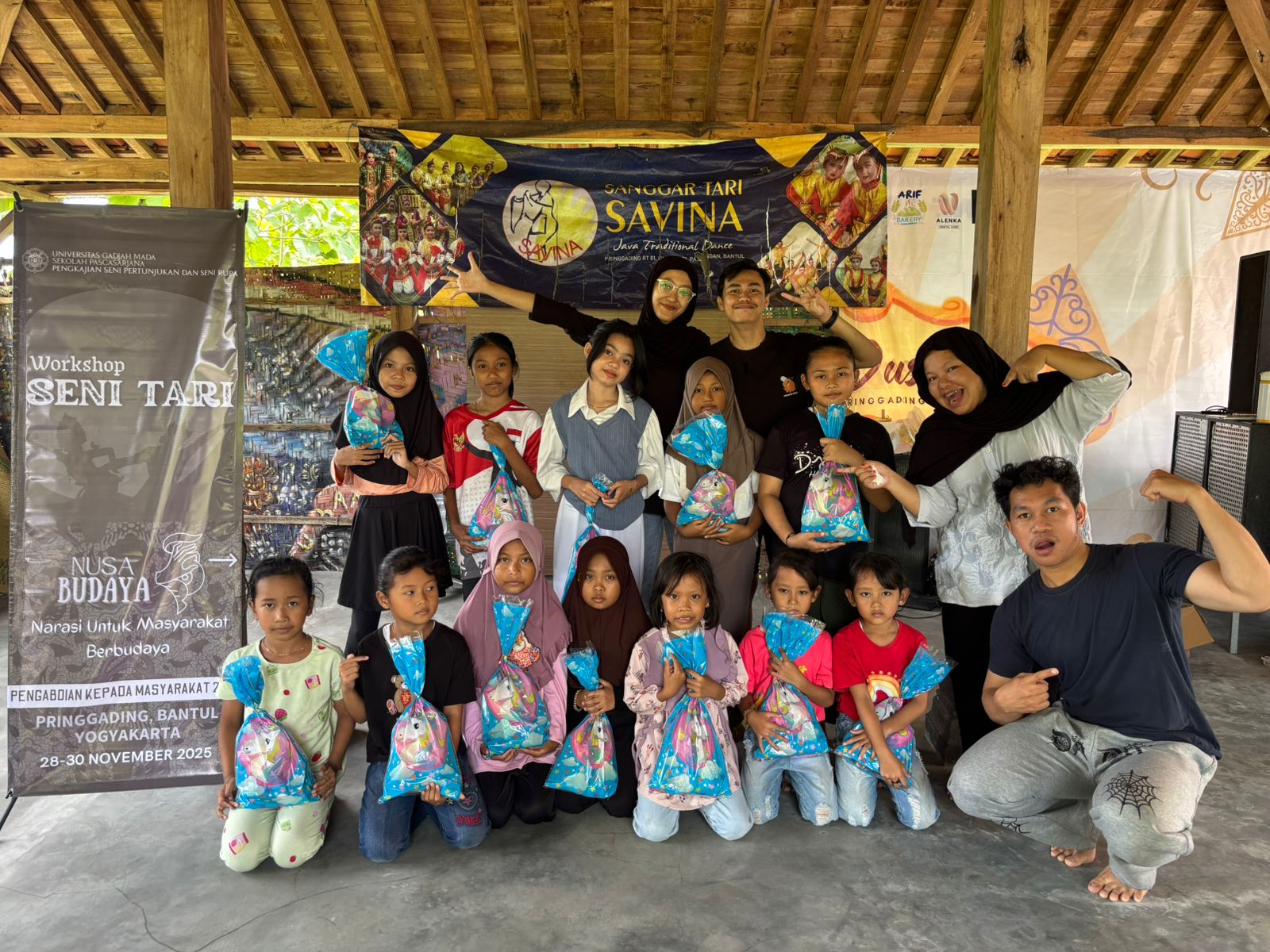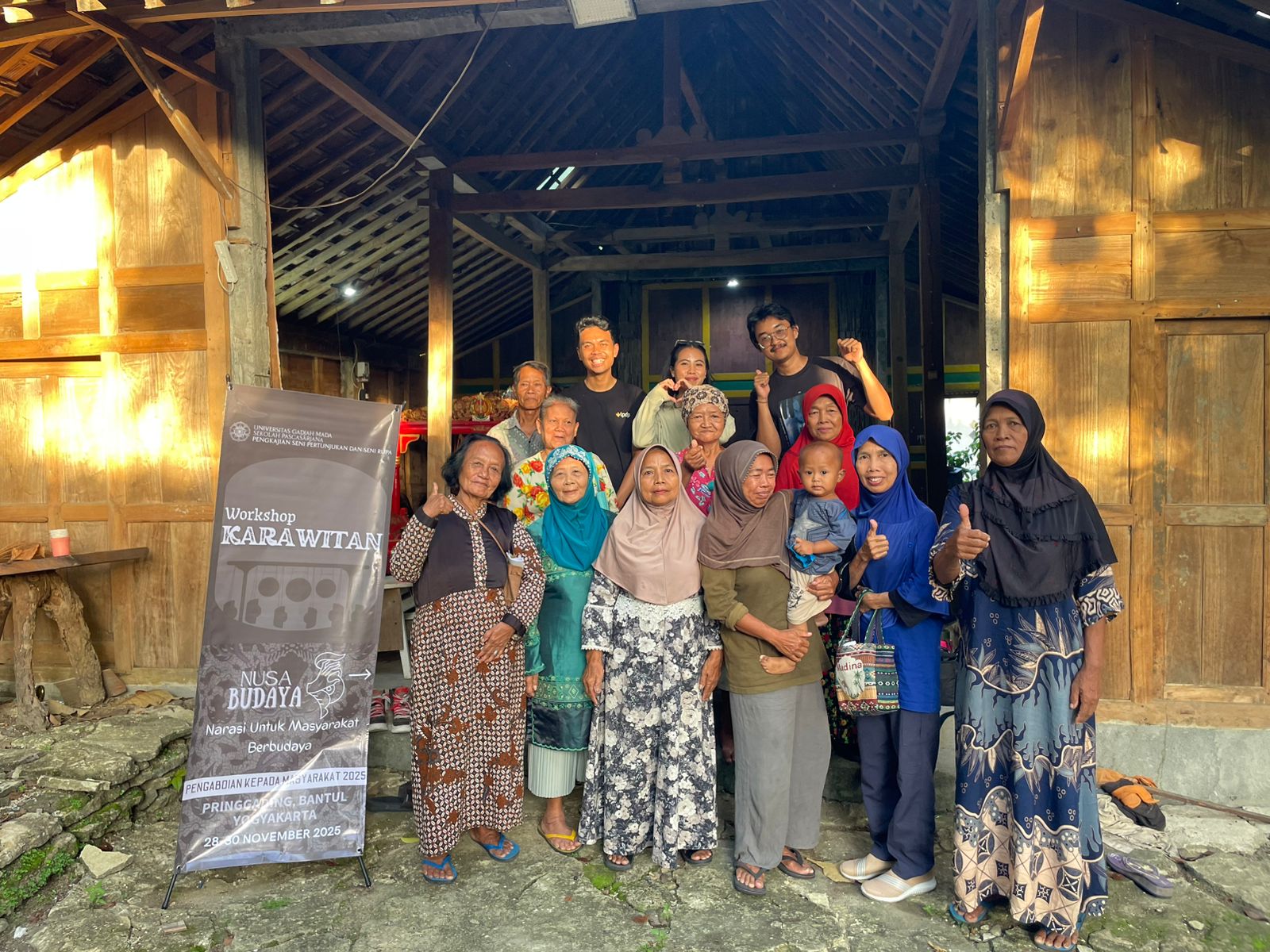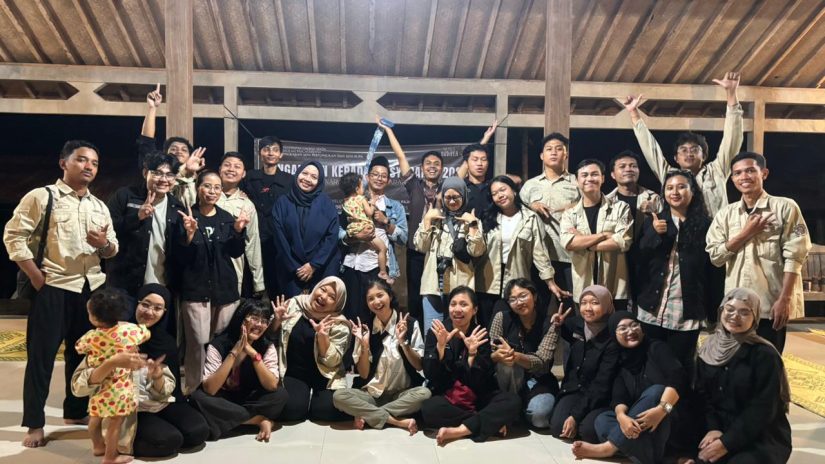
Bantul – The Study Program of Performing Arts and Visual Arts Studies (PSPSR), Graduate School of Universitas Gadjah Mada (UGM), implemented a Community Engagement Program entitled Nusa Budaya, which took place on 28–30 November 2025 in Pringgading, Bantul. This program reaffirmed the role of art not merely as an aesthetic object, but as a living practice (laku) that is deeply rooted in tradition and actively contributes to sustainable community development.
Employing a participatory approach, the PSPSR UGM team initiated three main pillars of activation: a Batik Workshop, a Karawitan (Javanese gamelan) Workshop, and a Plate Dance (Tari Piring) Workshop. These activities were designed as a strategic response to contemporary challenges by repositioning traditional arts as a medium for quality education, cultural identity reinforcement, and inclusive knowledge transfer within the community context.
Within the Karawitan Workshop, the PSPSR UGM team successfully created two new gendhing repertoires as cultural archives for the Pringgading community. The Lancaran Ngudi Lestari embodies respect for elders and emphasizes the importance of intergenerational knowledge transmission. The use of the Slendro Manyura tuning system, combined with firm and dynamic kendang patterns and the clear interplay of bonang and saron, reflects the community’s steadfast commitment to preserving cultural practices amid the currents of modernity.
Meanwhile, the Ladrang Bakti Krida features a more monumental musical structure. The opening lyrics, “Wewengkoning katon endah…”, are interpreted through the gentle melodies of gender, gambang, and rebab, evoking the serenity and prosperity of Pringgading’s landscape. The composition culminates in dynamic rhythmic patterns that symbolize the spirit of gotong royong (collective collaboration) as a holistic effort toward building an independent and progressive village.
In the visual arts domain, this community engagement program resulted in the creation of a distinctive batik motif entitled Pringgading Kawedar. Based on the Semen pattern, which symbolizes growth and fertility, the motif narrates Javanese cosmological values emphasizing balance among human beings, nature, and the Divine. Elements such as bamboo (pring), the diamond-shaped core (inti wajik), creeping foliage and teak leaves, and the meru (mountain or gunungan) represent resilience, honesty, life energy, ecological awareness, and the geographical identity of Pringgading as part of the Pajangan hilly area.
The program was further enriched by the Plate Dance Workshop, which positioned the human body as a living site of cultural knowledge (embodied knowledge). This activity underscored that the cultural diversity of the Indonesian archipelago can adapt and flourish contextually within the socio-cultural landscape of Bantul. Overall, the program was conducted successfully and received enthusiastic participation from the local community.
This Community Engagement Program by PSPSR UGM aligns with the Sustainable Development Goals (SDGs), particularly SDG 4: Quality Education, through the promotion of culturally grounded and inclusive educational practices, and SDG 11: Sustainable Cities and Communities, by strengthening cultural heritage preservation and empowering local communities as a foundation for sustainable development.
With the conclusion of this program, Pringgading has gained symbolic capital in the form of newly created musical repertoires and a distinctive batik motif, demonstrating that innovation within traditional arts can harmoniously coexist with cultural continuity. Pringgading Kawedar stands as evidence that traditional arts possess significant strategic potential in fostering culturally, socially, and ecologically resilient communities. (Asriuni)